For healthcare facilities, power continuity isn’t a preference—it’s a patient safety mandate. From ICU monitors to surgical suites, imaging equipment to electronic health records, even a momentary power disruption can have life-altering consequences.
Yet many hospitals and healthcare facilities are still running on legacy lead-acid UPS systems installed a decade or more ago. These systems were designed for a different era of power demands, and they’re increasingly becoming a liability. Industry estimates suggest a significant percentage of healthcare facilities are operating UPS infrastructure that’s at or past its recommended replacement cycle, yet many haven’t formalized an upgrade path.
Here’s what’s driving the shift to Lithium UPS systems, what the upgrade process actually looks like, and what healthcare IT managers and facilities directors should demand from any new solution.
The Problem With Lead-Acid in a Healthcare Environment
Lead-acid batteries have served data centers and critical facilities for decades. But healthcare environments have specific demands that expose the limitations of older technology.
- Degraded performance over time. Lead-acid batteries lose capacity with each charge cycle and are highly sensitive to temperature fluctuations—a real risk in facilities where HVAC conditions vary across wings, mechanical rooms, and data closets.
- High maintenance overhead. Lead-acid systems require regular testing, watering (for flooded variants), and full battery replacement on a 3–5 year cycle. For healthcare facilities teams stretched thin, this is a significant operational burden.
- Thermal runaway risk. Aging lead-acid batteries are susceptible to thermal runaway—a condition where battery failure generates heat that accelerates further failure. In clinical environments, this presents serious safety and downtime risk.
- Footprint and weight. Lead-acid UPS systems are heavy and bulky. In facilities where every square foot is accounted for and where retrofitting is expensive, that physical footprint matters.
- Regulatory scrutiny. NFPA 99 and Joint Commission standards around healthcare power infrastructure are tightening. Older UPS systems that can’t demonstrate verified runtime or fail periodic testing create real compliance exposure.
What the Upgrade Decision Actually Involves
Moving from lead-acid to a Lithium UPS system isn’t just a battery swap—it’s a strategic infrastructure decision. Here’s what facilities directors and IT managers should be thinking through.
Runtime requirements. How long does your facility need backup power, and for what load? Emergency lighting, life safety systems, and critical medical equipment often carry different runtime mandates under NFPA 99. A proper Lithium UPS solution should be sized to your actual needs, not a generic default.
Physical footprint. Lithium UPS systems are significantly smaller and lighter than lead-acid equivalents at the same capacity. For facilities with constrained mechanical rooms or modular deployments, this is a real operational advantage that can simplify retrofit installations considerably.
Total cost of ownership (TCO). The upfront cost of a Lithium UPS system is typically higher, but the 10+-year service life, dramatically reduced maintenance requirements, and lower cooling overhead often make it the more economical choice over a full lifecycle comparison. When evaluating vendors, request a documented TCO analysis that accounts for battery replacement cycles, maintenance labor, and expected downtime exposure. The numbers frequently tell a compelling story.
Integration with existing infrastructure. Can the new system communicate with your building management system (BMS) or DCIM platform? Real-time monitoring and alerting are increasingly expected for Joint Commission compliance and enterprise facilities management.
Key Specs Healthcare Facilities Should Demand
Not all Lithium UPS systems are built for mission-critical healthcare environments. When evaluating options, your team should insist on:
- Verified runtime under real load, not just theoretical capacity. Demand documentation.
- NFPA 99 compliance and support for AHJ (authority having jurisdiction) documentation requirements.
- Integrated thermal management built into the battery module design, not afterthought cooling.
- Redundancy options—N+1 or parallel configurations to eliminate single points of failure.
- Remote monitoring with granular alerts for battery health, charge state, and anomalies.
- Scalability—the ability to add capacity without a full system replacement as your loads evolve.
- Mission-critical service response—healthcare infrastructure doesn’t take weekends off. Neither should your service provider.
How N1C’s LX Series Is Purpose Built for 24/7 Mission-Critical Environments
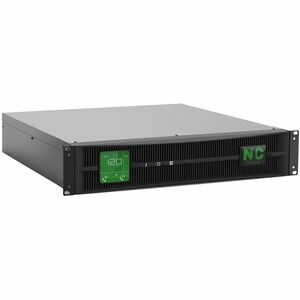
N1C’s LX Series Lithium UPS systems were designed from the ground up for environments where failure is not an option. With deep expertise in healthcare, government, and enterprise deployments, N1C brings more than hardware. We bring a track record of keeping critical systems online. Unlike off-the-shelf alternatives repositioned for healthcare, the LX Series delivers:
- Purpose-built Lithium UPS battery modules with integrated cell-level monitoring
- A smaller footprint than comparable lead-acid systems, without sacrificing runtime or reliability
- Seamless integration with standard BMS and DCIM platforms
- Proven deployments across hospital systems, government facilities, and enterprise data centers
- A service infrastructure built around rapid response and proactive battery health management
Healthcare facilities that have migrated to the N1C LX Series have reported lower maintenance overhead, improved compliance documentation, and greater confidence in their power infrastructure’s ability to perform when it counts. Whether you’re replacing aging lead-acid systems or designing a new facility’s power strategy from scratch, the LX Series is built to meet the moment.
For more on N1C’s hospital and healthcare solutions, visit n1critical.com/industries/healthcare. To explore the full product lineup, visit n1critical.com/products.