The Infrastructure Gap Is Getting Harder to Ignore
AI. Edge computing. Smart buildings. Industrial automation. These are not trends on a roadmap. They are live, operational realities running in facilities right now, and they are drawing more power, generating more heat, and demanding more from backup systems than anything that came before them.
The problem is that the infrastructure protecting most of these systems has not kept pace. Across enterprise data centers, school networks, manufacturing floors, and government facilities, lead-acid UPS systems built for a simpler era are still doing the heavy lifting. They were not designed for this. And the gap between what they can deliver and what modern technology demands is widening every year.
Lithium UPS is not just an upgrade. It is the only backup power technology engineered to meet the demands of modern infrastructure.
How Modern Technology Is Rewriting Power Requirements
AI Infrastructure and Data Centers
AI workloads are power-hungry by design. GPU clusters running large language models, machine learning pipelines, and real-time inference operations require high-density, continuous power with zero tolerance for interruption. A single rack in a modern AI data center can draw ten times the power of a standard server rack from a decade ago.
Data center power demand is expected to double by 2030, driven largely by AI processing requirements. Traditional UPS systems, engineered for static office IT loads, cannot scale to match those density and runtime demands.
It Is Not Just the Big Players Anymore
Google, Amazon, and Microsoft are not the only organizations running critical servers. Schools are deploying on-premises servers to support digital learning platforms, administrative systems, and network infrastructure. Small businesses are running their own server environments for ERP systems, point-of-sale, and cloud backup. Municipal governments are operating data centers to support public safety communications and permitting systems.
These organizations carry the same uptime requirements as enterprise customers without the luxury of redundant facilities or dedicated power engineering teams. For them, a UPS failure is not a performance issue. It is an operational crisis.
Smart Buildings and IoT
Modern commercial buildings run thousands of connected endpoints: HVAC sensors, digital access control, lighting automation, and security systems. Each one requires stable, uninterrupted power. A brownout or surge does not just take the lights out. It corrupts data, triggers false alarms, and can take entire building management systems offline.
The smart building market is projected to reach $570 billion by 2030. Every dollar of that investment depends on reliable backup power. Without it, the connected building becomes a liability.
Edge Computing
Edge nodes are deployed in retail environments, remote field operations, and distributed manufacturing sites where on-site IT support is not available. When a UPS fails at an edge location, it could be hours or days of downtime before a technician can respond. These deployments require compact, low-maintenance systems with maximum runtime in the smallest possible footprint.
Why Legacy UPS Systems Cannot Keep Up
Lead-acid UPS technology has a fundamental problem: it was not built for the environment in which modern infrastructure operates. Here is what that means in practice.
- Temperature sensitivity: Lead-acid batteries lose capacity and fail prematurely in high-heat environments. Data center hot aisles and industrial deployments regularly exceed the operating range where lead-acid performs reliably.
- Slow recharge: After a power event, lead-acid batteries require hours to recharge to full capacity. In environments with frequent or repeated outages, that delay leaves systems exposed.
- Short replacement cycles: Lead-acid batteries typically require replacement every three to five years. In a large data center or distributed deployment, that creates continuous operational disruption and cost.
- Space and weight: Lead-acid systems are physically large and heavy. In high-density environments where rack space is a premium asset, that footprint comes at a direct cost.
- Maintenance overhead: Lead-acid batteries require regular inspection, terminal cleaning, and water checks. In distributed or edge deployments, that maintenance burden compounds quickly.
In mission-critical environments, UPS failure is not an inconvenience. It is measured in lost revenue, compromised safety systems, and regulatory exposure.
How Lithium UPS Meets the Moment
Lithium UPS technology was engineered for the performance profile modern infrastructure demands. The advantages are not incremental. They are categorical.
- 5x energy density: Lithium UPS delivers five times the energy of lead-acid in one-third the physical space. High-density deployments get more protection in less real estate.
- Faster recharge: Lithium batteries recharge significantly faster than lead-acid, restoring full capacity in a fraction of the time. In environments with repeated power events, that matters.
- Temperature resilience: Lithium UPS systems operate reliably across a broader temperature range, handling higher base operating temperatures without derating or premature failure. Edge deployments and industrial environments get consistent protection regardless of ambient conditions.
- 15-year design life: Built to last. Fewer replacements, lower total cost of ownership, and less operational disruption over the life of the deployment.
- Maintenance-free operation: No water checks, no terminal cleaning, no scheduled replacement cycles. Lithium UPS simply runs.
N1C: Built for What Is Next
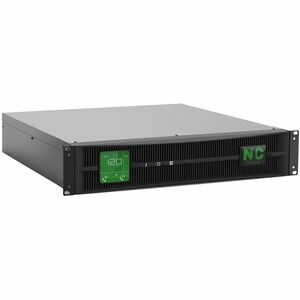
N1C was the first to master lithium-ion technology in the UPS space. The company continues to lead the industry in product design, warranty coverage, and real-world performance, and has the track record to back it up.
N1C’s product line spans compact rack-mount units to large-scale three-phase systems, covering deployments from school server closets to enterprise data centers. Every system carries a 10-year full replacement warranty and a 15-year design life. The warranty claim rate sits below 1%, a benchmark no competitor has matched.
N1C is proven across government, healthcare, education, manufacturing, retail, and data security verticals. And every customer has access to USA-based 24-hour support from a team that knows the product and the environment it operates in.
Modern technology demands modern power protection. N1C delivers it.
Ready to upgrade? Explore N1C’s Lithium UPS systems at n1critical.com/products or find a reseller near you at n1critical.com/find-a-reseller.