The Stakes Just Got Higher
2026 isn't a year of emerging trends. It's the year those trends become hard requirements.
In our 2025 data center outlook, we outlined how booming demand for cloud, AI, and always-on digital services was forcing operators to rethink power, cooling, and infrastructure resilience. The pressure was already building to modernize aging infrastructure, maximize capacity, and treat downtime as the unacceptable business risk it truly is.
That context hasn't changed. But the game has shifted. AI-native workloads, tightening regulations, and harder limits on power and water have turned "watch this space" into "act now or fall behind." Here's what's driving the transformation and what it means for your critical infrastructure strategy.
AI Is Now the Design Center
AI isn't just another workload running alongside your enterprise applications. In 2026, it's the primary driver reshaping how data centers are designed from the ground up.
Facilities are being built AI-first, with GPU clusters and high-density racks dictating power distribution, cooling architecture, and redundancy models before a single tile is laid. The numbers tell the story clearly: average rack densities have climbed from roughly 6 kW a decade ago to around 16 kW today, and AI racks are pushing 30–40 kW and beyond. That's not an incremental upgrade. That's a complete re-architecture of power and thermal systems.
AI is also being deployed to operate the data center itself by optimizing cooling loads, predicting equipment failures, and orchestrating workloads to stay within tight power and thermal envelopes. The data center of 2026 is as much a software-defined infrastructure challenge as it is a hardware one.
For operators, the implication is clear: your power protection strategy needs to keep pace with AI-driven density. A UPS system designed for yesterday's rack densities won't protect today's compute-intensive workloads.
Power Is the New Real Estate
If AI is the design center of the modern data center, power availability is the ceiling.
Global data centers already consume hundreds of TWh annually, representing a low single-digit share of total global electricity consumption. If AI-oriented growth goes unmanaged, that figure could double or quadruple by 2030. Utilities are already straining under the new load, and operators can no longer afford to be passive consumers waiting for the grid to deliver.
The new playbook involves co-investing in grid upgrades, on-site energy generation, and energy storage systems. Diversified power strategies (mixing renewables, natural gas, batteries, and emerging technologies) are quickly becoming the standard approach for balancing reliability, cost, and sustainability commitments.
This shift places greater emphasis on robust, scalable UPS systems that can integrate with complex, multi-source power environments. Uninterrupted operation isn't just about keeping the lights on during a brief outage. It's about maintaining uptime across a much more dynamic and distributed power landscape.
Cooling Goes Mainstream and Gets Complicated
Cooling has always mattered in data center operations. In 2026, it's where AI, power efficiency, and sustainability all collide at once.
Cooling already accounts for roughly 40% of total data center energy consumption, making efficiency gains in this area central to managing overall energy budgets. With AI servers generating significantly more heat per rack than traditional hardware, air cooling alone is no longer sufficient for high-density environments.
Liquid cooling—direct-to-chip, immersion, and CDU-based systems—is rapidly moving from niche to mainstream as the only realistic path to cooling very hot AI servers at scale. Industry experts expect modular, skidded liquid cooling units to become the de facto model for new high-density builds by late 2026. Rear-door heat exchangers and hybrid air/liquid strategies are serving as practical stepping stones for operators upgrading existing facilities.
The takeaway: cooling modernization and power modernization are happening simultaneously. Operators who address one without the other will find themselves constrained on both fronts.
Sustainability Is Now an Operational KPI
The "green data center" narrative has evolved well beyond marketing language. In 2026, sustainability is a measurable, reportable, and regulated operational requirement.
In Europe, directives such as the revised Energy Efficiency Directive are requiring data centers above certain IT loads to report detailed metrics, including PUE, waste heat recovery, and energy mix data. A dedicated EU package targeting data center sustainability is expected around 2026, and similar regulatory frameworks are taking shape globally.
Operators are increasingly treating sustainability data like emissions, energy mix, and waste heat as part of the same governance and security stack they apply to uptime, latency, and data protection. It must be measured, protected, and reported with the same rigor.
For enterprise data centers, this means selecting infrastructure partners who support long-term sustainability goals. Lithium-ion UPS systems, for example, offer a significant environmental advantage over legacy lead-acid alternatives, with greater energy density, longer operational life, and fewer replacement cycles driving down both cost and environmental footprints over time.
Regulatory Pressure Is Fragmenting Compliance
Regulation has moved from background noise to a primary factor in where and how new data center capacity gets built.
States across the U.S. are moving aggressively: over 300 state-level data center bills were introduced in early 2026 across more than 30 states, addressing energy use, tax incentives, and environmental impact. Proposals in states like New York and New Jersey would require data centers to source power from clean or nuclear capacity, with phased renewable purchase milestones and mandatory environmental reporting.
Multiple states are also tying tax incentives to specific operational requirements, including emission-free backup generators, renewable energy commitments, and detailed sustainability disclosures. That means the UPS systems and backup power infrastructure you specify today may directly impact your regulatory standing and tax posture tomorrow.
The compliance landscape is fragmented and evolving quickly. Operators need infrastructure partners who understand this environment and products built with longevity and regulatory adaptability in mind.
Edge, Modularity, and Digital Sovereignty
Not every workload belongs in a hyperscale campus. In 2026, edge data centers are becoming the natural home for latency-sensitive AI inference and data-intensive applications deployed closer to cities, manufacturing sites, and end users.
Modularity is a defining design principle for this era. Organizations want to scale in repeatable, manageable blocks rather than committing to massive, monolithic builds. This approach reduces upfront capital risk while maintaining the flexibility to expand as demand grows.
Digital sovereignty has also emerged as a core requirement over which enterprises expect precise control with regard to where data lives and how it's processed. Distributed networks, sovereign cloud environments, and hybrid architectures are all gaining ground as operators balance performance, compliance, and control.
How N1C Powers Data Centers in 2026
The complexity of today's data center environment demands infrastructure partners who don't compromise. N1C has built a reputation on exactly that: delivering Lithium UPS systems engineered to support the demands of modern enterprise data centers.
Industry-Best Warranty and Design Life
N1C's Lithium UPS systems are backed by an industry-best 10-year warranty and built with a 15-year design life. In a world where total cost of ownership and long-term reliability are increasingly under scrutiny, that's not a footnote—it's a competitive advantage. Less time replacing equipment means less downtime, lower operational costs, and a smaller environmental footprint.
Custom Power Solutions for Every Environment
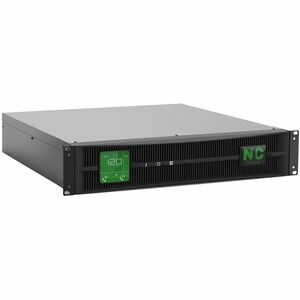
No two data centers are alike, and N1C's solutions reflect that. Whether you're deploying compact rack-mounted UPS systems in an edge environment or scaling tower designs for a high-density AI facility, N1C engineers solutions built around your specific power requirements, not the other way around.
USA-Based Customer Support
When critical infrastructure is at stake, response time matters. N1C's 100% USA-based customer service team addresses all inquiries within 24 hours, delivering real expertise and fast resolutions from people who know our systems inside and out.
The Bottom Line
2026 is a defining year for data center infrastructure. AI-first design, power constraints, aggressive sustainability targets, and a fragmented regulatory landscape are forcing operators to make decisions that will shape their competitive position for the next decade.
The operators who will lead aren't the ones waiting for the industry to stabilize. They're the ones investing in infrastructure that's built to last with partners who stand behind it.
Ready to future-proof your data center's power strategy? Contact N1C today.