Why does the cost of downtime matter?
Downtime is not just an IT inconvenience. Across all industries, downtime represents a loss in revenue, productivity, and customer trust.
Facilities managers and IT directors are in charge of preventing these incidents and justifying investments for updated or new infrastructure. That’s why understanding how to calculate downtime costs and the ROI of proper infrastructure is essential for IT leadership as well as executive teams and board members to ensure business continuity plans are set up for success.
What is the cost of downtime?
The “cost of downtime” is the total financial and operational impact that occurs when critical systems, applications, or infrastructure shut down or become unavailable. Many people look at lost revenue as the sole cost, but that’s only part of the picture.
Direct Costs
Direct costs are the immediate, measurable losses that show up in incident reports.
- Lost sales or transactions
- Missed production output
- SLA (Service-Level Agreements) penalties and contractual fines
Indirect Costs
These costs often exceed direct losses but may not be immediately visible.
- Employee idle time and lost productivity
- Delayed projects and missed deadlines
- Emergency recovery efforts and overtime labor
Hidden or Long-Term Costs
These costs can be subjective and are often underestimated in initial post-incident analysis, but they’re often the hardest to recover.
- Customer churn and loss of trust
- Brand and reputational damage
- Regulatory exposure and compliance violations
- Increased insurance and risk premiums
As organizations become much more dependent on digital systems and continuous operations, downtime risk increases, which leads to even broader business disruptions. That’s why what used to be solely under the IT director’s jurisdiction is widely becoming a board-level issue.
How much does downtime cost per industry?
Downtime costs vary widely depending on industry, business size, and types of systems that are in use. According to Forbes, the average cost of downtime for large organizations is as high as $9,000 per minute. But we know that downtime costs are highest in industries with ongoing operations, high-traffic volumes, or very strict regulations (like healthcare, manufacturing, and data centers.)
- Small businesses: Up to $427 per minute
- Manufacturing facilities: $260,000 per hour
- Data centers: $300,000–$540,000 per hour
- Healthcare facilities: $600,000+ per hour (plus patient safety risk)
- Retail/E-commerce: $10,000 per hour (10× during peak periods)
How to calculate the cost of downtime
Here’s a practical framework that can be used to calculate your business’s specific downtime exposure.
Downtime Cost = [(Lost Revenue per Hour) + (Employee Cost per Hour)] x Duration + Recovery Costs + Penalties
Step 1: Calculate Lost Revenue per Hour
- (Annual Revenue ÷ Operation Hours) x % affected by power outage
Step 2: Calculate Employee Idle Cost per Hour
- Hourly employee cost = Number of affected employees x Loaded rate
Step 3: Estimate Recovery Costs
- Recovery Duration is typically 2-4x the duration of the outage
- Recovery Costs = Cost of Overtime premiums + Cost of Equipment restart + Cost of Rush materials
Step 4: Add Penalty/Compliance Exposure
- SLA credits + Regulatory risk (if applicable)
Example:
Facility Profile:
- $50M annual revenue
- 2,080 operating hours
- 150 employees at $35/hour base ($47.25 loaded)
- 80% operations affected during power outage
Calculation:
- Lost revenue: ($50M ÷ 2,080) x 0.80 = $19,230/hour
- Employee idle cost: 150 x 47.25 = $7,088/hour
- Recovery costs (for 1-hour outage): $8,500
- Regulatory documentation: $3,000
Total cost of downtime for a single 1-hour outage: $37,818
The ROI of UPS Systems in Downtime Cost Reduction
Shifting the conversation from “cost” to “cost avoidance” is key, whether you’re looking for the right solution for your business or you’re justifying the investment to your leadership team.
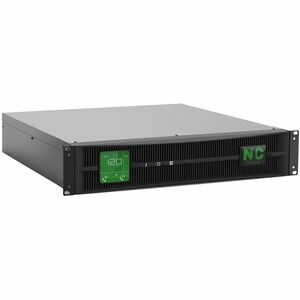
If a single outage costs your facility: $37, 818 per hour (from our example above), and a Lithium UPS system prevents even one outage per year over a 15-year system lifespan, then you can expect your return on investment to be:
- Investment: $4,900 Lithium UPS system
- Annual cost avoidance: $37,818 (one prevented 1-hour outage)
- 15-year value: $567,270 in prevented downtime costs
- ROI: >$11,000% over 15 years
Payback Period
In many instances, UPS systems pay for themselves by preventing a single incident. A $4,900 investment pays for itself in approximately 8 minutes of prevented downtime; This makes them one of the most cost-effective investments in operational resilience you can make for your business.
Common Causes of Downtime
It’s helpful for all those who are involved in putting together a business continuity plan to know what they’re up against. While downtime can result from many factors, the most common causes include:
- Power outages and fluctuations (54% of incidents)
- Cooling system failures (13%)
- Network-related problems (12%)
- Other causes including IT system failures, cyber attacks, and physical security incidents (21%)
Strategies for Minimizing Downtime
Reducing downtime isn't about eliminating all risk, rather, it's about making smart investments that reduce how often outages happen, how long they last, and how much damage they cause. Here are four practical strategies you can implement.
Eliminate Single Points of Failure
What this means: Make sure no single equipment failure can take down your entire operation.
- Install redundant power supplies for critical equipment.
- Use dual network connections from different providers.
- Deploy backup and disaster recovery tools with automatic failover logic that switches to secondary systems without manual intervention.
Set Up Real-Time Monitoring and Automation
What this means: Know about problems before they cause outages and let systems respond automatically.
- Monitor UPS battery health, temperature, and load continuously.
- Deploy automation tools that trigger alerts and initiate responses without waiting for human action.
- Track system performance trends to catch degradation early.
- Consider managed IT services providers for 24/7 monitoring if you lack in-house staff.
Test Your Recovery Plans and Train Your Team
What this means: Make sure your backup systems actually work when you need them, and ensure your team knows what to do.
- Run monthly automated UPS self-tests and ITDR (IT disaster recovery drills) exercises.
- Conduct quarterly simulated failover exercises with your team.
- Verify backup generators start and transfer properly
- Document your recovery point objectives (RPOs)—consider how much data loss is acceptable.
- Provide employee training on emergency procedures and communication protocols.
Learn from Every Incident with Post-Incident Analysis
What this means: Turn every outage into an opportunity to prevent the next one.
- Conduct incident postmortems within 48 hours of any downtime event.
- Document root causes, response timeline, and what worked versus what didn't.
- Update disaster recovery planning based on lessons learned.
- Share findings with leadership and adjust resilience budgets accordingly.
- Address reputation management if customer-facing services were affected.
Why UPS Systems Are the Key to Downtime Prevention
Infrastructure and IT professionals know that even the best recovery plans can fail if the systems in place can’t stay powered on long enough to execute designated procedures.
While software security and cloud failover are a key focus, what’s needed before that is often overlooked: stable, continuous power.
Plus, damaging power disturbances aren’t always city-wide blackouts. Even brief fluctuations can cause:
- Systems to crash mid-operation
- Database and file system corruption
- Damage to sensitive equipment (servers, storage, networking gear)
- Extended recovery time by requiring additional system validation
How Modern UPS Systems Address Downtime at Its Source
A properly designed UPS solution:
- Maintains continuous power during outages and instability
- Allows systems to fail over to backup sites with ease or shut down safely
- Protects critical IT and operational technology from voltage spikes and sags
- Reduces unplanned downtime and recovery costs through reliable battery performance
Frequently Asked Questions
What is the average cost of downtime?
Mid-sized and large organizations typically experience up to $9,000 per minute. Calculate your specific exposure using the framework above—it varies significantly by industry and operations.
What is the most common cause of downtime?
Power-related issues account for 54% of incidents—the most frequent and preventable cause, which is why power continuity delivers such high ROI.
How do lithium UPS and lead-acid batteries compare?
Lithium UPS offers a 10–15-year life versus 3–5 years for VRLA, resulting in 60–70% lower lifecycle costs. These batteries are also 60% smaller and 70% lighter, freeing valuable space in constrained facilities.
How do I justify infrastructure investment on tight budgets?
Frame it as risk mitigation with quantifiable ROI. Show that preventing a single incident delivers returns. Propose phased implementation, starting with the most critical systems if needed.
How does N1C’s UPS systems compare to other Lithium UPS battery providers?
N1C delivers a lower total cost of ownership with a 10-year warranty, complimentary monitoring software (saving thousands in annual subscription fees), and 100% U.S.-based customer support, which reduces downtime and the cost of your time compared to other lithium UPS providers.
Conclusion: Downtime is a Board-Level Issue, and Power Continuity is the Solution
The cost of downtime continues to rise as natural disasters, grid instabilities, and surging demands increase. As more and more organizations rely heavily on digital and “always-on” systems, downtime is no longer just an IT issue, but a business-wide threat that requires board-level understanding and strategic planning.
Understanding the True Cost of Downtime Is the First Step
Calculating specific exposure gives you the numbers you need for budget justification.
Building the business case for power continuity infrastructure—particularly modern Lithium UPS systems—demonstrates how relatively modest investment delivers substantial, quantifiable risk reduction.
Calculate Your Exposure and Evaluate Your UPS Options with N1C
Contact N1 Critical Technologies to discuss your facility's power protection requirements and develop a solution that delivers both operational reliability and financial justification.
Explore More Resources
Find UPS Solutions | Calculate UPS Sizing | View Industry Solutions